Finding Self-Love Amidst Anger and Absence
Embracing Your Worth When the World Feels Unfair
February 2026
Parental alienation is one of the most challenging emotional experiences anyone can face. It’s a heartbreaking reality where a parent is unfairly distanced from their children, often due to manipulation or misunderstanding. The pain of not seeing your children is compounded by anger—anger directed at the unfair circumstances, at the other parent, and sometimes even at yourself.
In the midst of this turmoil, it’s easy to lose sight of your own worth. Anger and sadness can overwhelm even the strongest individuals, making self-love seem impossible. However, loving yourself is not only possible but necessary for healing and growth. Self-love is about acknowledging your pain, validating your feelings, and permitting yourself to grieve without guilt.
Begin by practicing compassion towards yourself. Remember that alienation is not a reflection of your abilities or value as a parent. It’s often the result of factors outside your control. Surround yourself with supportive friends, join communities of people who understand your experience, and seek professional help if needed. These steps can remind you that you’re not alone and that your feelings are valid.
Focus on self-care routines that nurture your body and mind. Whether it’s journaling your emotions, taking up a hobby you love, or simply taking time to rest, every small act is a step toward rebuilding your confidence. Celebrate your strengths, acknowledge your resilience, and remind yourself daily that your love for your children is real—even if you cannot express it directly.
Forgiving yourself and letting go of some anger can be liberating. It doesn’t mean forgetting what happened; it means choosing not to let bitterness define your life. Ultimately, loving yourself amidst parental alienation is a journey, not a destination. With patience and perseverance, you can find peace, rediscover hope, and prepare for the day when reconciliation becomes possible. Your story is not over, and your love is still powerful.
New Year, New View
Choosing Peace Over Fear

January 2026
No child or parent should have to face parental alienation. It is among the most emotionally challenging experiences. The wounds are deep, and often the future feels uncertain and painful.
But what if you choose to focus on peace instead of drowning in fear? Could you regain a sense of agency and hope?
What is peace? A Google search provided a simple definition of the word peace: freedom from disturbance; tranquility. Some synonyms include calm, restfulness, quiet, and harmony.
When your children are absent, oftentimes abused in one way or another (emotionally, mentally, and/or physically), it’s natural to feel afraid or overwhelmed. What if you introduce a mindset rooted in peace, or at least allow a little peace? Peace doesn’t mean ignoring the pain or pretending everything is fine. But it can mean seeking healing and refusing to let fear dictate your future. By focusing on what you can control, your reactions, intentions, and personal growth, you gently shift your perspective from victimhood to empowerment.
Ways to find peace:
- Seek Support: Reach out to trusted friends and family. Although I realize those groups sometimes don’t understand this family dynamic. Find a therapist, support group, or professionals who understand the challenges of parental alienation.
- Focus on Communication: Whenever possible, maintain positive contact with your child and keep the lines of communication open. If there is no communication, drip love when appropriate and in whatever way feels best for your situation.
- Practice Self-Care: Prioritize your mental and emotional health through coping strategies that work for you. My book HOW?? Coping with Parental Alienation reveals some of the tools that have helped me on my journey.
- Stay Hopeful: Healing is a journey. Celebrate the small victories along the way and let hope be your guiding light.
- Carry a Crystal: Crystals carry healing properties. Carrying a small stone can also serve as a reminder of your intention. Two crystals that symbolize peace are the Rose Quartz and Amethyst.
The journey through parental alienation is never easy, but choosing peace over fear can turn even the toughest times into chances for growth and connection. By creating ways to promote peace (calm, restfulness, quiet, and harmony, whatever you want to call it at any given moment), maybe you can pave the way for a brighter future, one step at a time, no matter how small.
I want to sincerely wish you a peaceful New Year. I cannot promise your children will be back or that your ex will bring you any peace in the upcoming year. However, my hope for you is that you discover ways to feel a little lighter, allowing your days to shine a little brighter.
The Loneliest Season
Healing and Hope for Alienated Parents during the Holidays

December 2025
For many, the holidays are a time of joy, togetherness, and tradition. But for parents experiencing alienation from their children, the holiday season can sharpen feelings of loss and isolation. If you are an alienated parent, know that you are not alone—and that your pain is seen, your experience is valid, and hope can still be found, even in the loneliest season.
Validation: Your Feelings Matter
It’s normal to grieve the absence of your child during the holidays. The world’s festive messages and images of happy families can highlight your sense of longing and exclusion. Allow yourself to acknowledge and honor your feelings without guilt. You are not “weak” for missing your child or wishing things were different. Alienation is a profound loss, and your sadness, anger, or frustration are understandable and justified.
Coping Tools
- Self-Compassion: Be gentle with yourself. Practice speaking to yourself as you would to a dear friend in your situation.
- Connect with Support: Reach out to trusted friends, relatives, or support groups—even if just to share your feelings. Online communities for alienated parents can be invaluable.
- Create New Traditions: While honoring past memories, consider inventing new rituals. Light a candle for your child, write them a letter (even if unsent), or volunteer in your community.
- Prioritize Self-Care: Mind your physical and emotional well-being. Eat nourishing foods, rest, move your body, and give yourself permission to step back from painful triggers (like certain gatherings or social media).
- Set Boundaries: It’s okay to say “no” to events or conversations that might intensify your pain. Protect your peace.
- Allow for Joy: Guilt may arise when you experience moments of happiness. Remember, finding joy doesn’t diminish your love for your child or the seriousness of your loss.
Encouragement for Brighter Days
Alienation is not a reflection of your worth or the depth of your love. Circumstances can change, and relationships can sometimes be rebuilt in unexpected ways. Even if reconciliation feels distant, your resilience and hope are powerful. Take pride in your continued love, your efforts to heal, and your capacity to move forward—one step at a time.
Seek inspiration in stories of others who have walked this path and found peace and renewed connections. Consider reaching out to a counselor or therapist who understands family dynamics and grief. Use this season to nurture yourself, hold space for hope, and trust that, in time, healing is possible.
To All Alienated Parents This Holiday Season
You are seen. Your heartache matters. The loneliness you feel does not define you. May you find moments of comfort, support, and gentle hope through the holidays and into the new year.
The Holidays Come, Our Children Don’t
The holidays through the lens of an alienated parent
November 2025
The holidays come together whether we are ready or not. They are meant to be filled with warmth and family togetherness. Lights go up, music plays—the world sparkles. However, for many of us who are alienated from our children, we sit in the quiet. It’s another Christmas. Another year without our children. These times serve as painful reminders of what we’ve lost—a season that once brimmed with love now echoes with silence.
People say, “Merry Christmas,” and we smile back, pretending not to feel the knife twist. Because how do you explain the kind of loss that isn’t a death, but feels like one? How do you tell someone that your children are alive—just unreachable, untouchable, turned against you by something you can’t fix?
There was a time when we decorated trees together, when laughter filled the house, when tiny hands helped wrap gifts. Now treasured traditions sit untouched, the stockings remain tucked away in their box, and the holiday cards go unwritten—uncertain if they’ll be opened at all or rejected by the favored parent. I can still hear his voice in my mind, and I can still see the excitement in his eyes. Those memories burn and comfort all at the same time. They are all I have left.
Alienation affects not only our children but also the rhythm of family life. It transforms ordinary days into grief and holidays into a struggle for survival. The world moves on, sharing cheerful family photos and talking about travel plans and gift lists, while we find ourselves sitting quietly in silence, counting the days until it’s over, simply trying to get to January. Grief sits heavy—not for what we lost, but for what’s been stolen: time, connection, innocence, love.
Parental alienation isn’t just separation. It’s erasure. You are alive but invisible in your child’s world. You love them fiercely, but from a distance that never closes. You replay every moment, every word, wondering what could have been different—and hating yourself for wondering, because deep down, you know your children (and you) didn’t deserve this.
It’s not just sadness–it’s the deep ache of love with nowhere to go. It sits in the dark with us—stubborn, defiant, unending. It’s what keeps us breathing when hope feels cruel. We reflect on shared memories, questioning how our parent-child bond evolved into one of separation and absence. We imagine them growing up in moments we’re not allowed to witness, wondering how their voices sound now, the individuals they’ve become, and the milestones we’ve missed.
And yet, beneath the pain, love endures—fearful yet unwavering, an unconditional love that no court order, no deceit, and no silence can extinguish. It becomes our flickering candle in the darkness—small but steadfast—reminding us that we are still parents. We still care. Our love is genuine, even when it goes unacknowledged.
So we decorate a little corner anyway. We whisper “Merry Christmas” or “Happy Holidays” into the atmosphere, believing that somehow, somewhere, those words find their way to our children.
If you’re out there, staring at an empty chair this holiday season, know that you are not forgotten and you are not alone. Your love still matters. Your children still have a parent who loves them beyond measure. They may not know it now. But one day—maybe one day—they will. Cling to hope, no matter how small. The holidays will come and go, but love remains everlasting. One day, that love may guide them back home.
Charles Manson and Parental Alienation
Exploring the Parallels

October 2025
Understanding Manipulation, Control, and the Power of Influence
When we think of Charles Manson, the infamous cult leader of the 1960s, the immediate association is with his ability to manipulate and control the members of his “Family.” While Manson’s crimes were extreme, the psychological tactics he employed bear a striking resemblance to the patterns seen in cases of parental alienation. This blog explores these unsettling similarities, delving into the ways both scenarios involve manipulation, psychological control, and the distortion of perception.
Understanding Charles Manson’s Methods
Charles Manson was not just a criminal—he was a master manipulator. He created an environment where his followers felt isolated from the outside world, dependent on his approval and guidance. Manson used psychological tactics such as love-bombing, fear, and the distortion of reality to convince his followers to accept his views and, ultimately, commit horrific acts. His power lay not in physical force, but in his ability to control minds and emotions.
Parental Alienation: A Subtle Form of Manipulation
Parental alienation occurs when one parent, intentionally or unintentionally, manipulates a child to reject or fear the other parent, often during a contentious divorce or custody dispute. The alienating parent may distort facts, exaggerate faults, or create a narrative where the other parent is seen as dangerous or unloving. Over time, the child’s perception of the alienated parent can be warped, leading to estrangement and lasting emotional harm.
Key Similarities Between Manson’s Tactics and Parental Alienation
Isolation from Support Systems: Manson isolated his followers from their families and friends, making them dependent on him for emotional needs. In parental alienation, the child is often cut off from the alienated parent, losing a crucial emotional support.
- Distortion of Reality: Both Manson and alienating parents twist facts and implant false beliefs. Manson convinced his followers that the outside world was evil; alienating parents may convince a child that the other parent is dangerous or unworthy.
- Emotional Manipulation: Manson created an environment of fear and love, alternating between affection and intimidation. Similarly, alienating parents may use guilt, fear, or excessive praise to control the child’s emotions and loyalty.
- Us vs. Them Mentality: Manson framed the world as a battle between “us” (the Family) and “them” (society). In parental alienation, the child is often encouraged to see one parent as “good” and the other as “bad,” creating a divisive, black-and-white worldview.
The Psychological Aftermath
The long-term effects of both Manson’s influence and parental alienation are profound. Manson’s followers struggled to reclaim their identities after leaving the cult. Similarly, children affected by parental alienation may experience confusion, guilt, and difficulty forming healthy relationships. The common thread is the lasting impact of psychological manipulation, which can be as damaging as more visible forms of abuse.
Conclusion: Recognizing and Addressing Manipulation
While the contexts of Charles Manson’s cult and parental alienation are vastly different, the underlying mechanisms of manipulation and control are strikingly similar. Recognizing these parallels can help us better understand the dynamics of psychological abuse, whether in the context of a notorious cult or a fractured family. By acknowledging the power of influence, we can work toward preventing such harm and supporting those affected by it.
Addressing the Emotional Toll of Parental Alienation and Urging Self-Care
Sharing her personal journey and coping strategies
September 2025
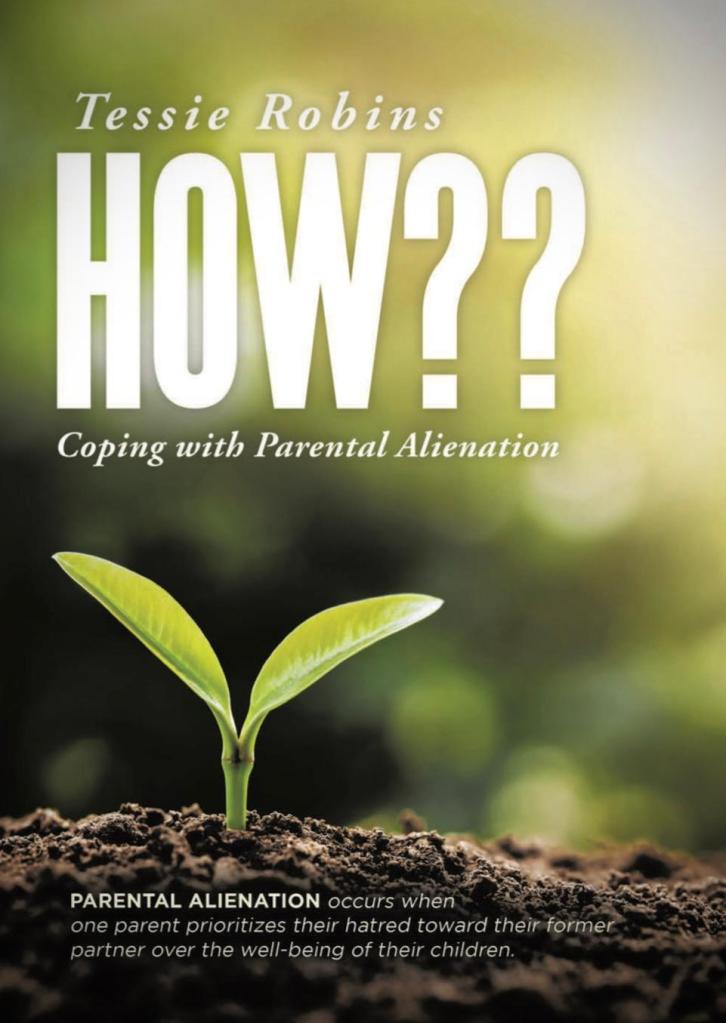
As Tessie Robins enters the publishing scene with the release of “HOW?? Coping with Parental Alienation, ” the book addresses a frequently overlooked trauma experienced by many separated or divorced parents: the emotional and psychological toll of being cut off from a child.
Based on her own experience and years of self-study, Robins presents actionable advice and emotional support aimed at helping parents prioritize their well-being while confronting the complex dynamics of parental alienation. Here, the author discusses typical characteristics of people who become victims of parental alienation, how to learn from those tendencies to avoid repeating them in the future, self-care methods for better mental and physical health, conscious awareness of triggers that lead to emotional breakdowns, and even ways to advocate for an alienated child. Ultimately, she encourages alienated parents to reframe their identity around self-compassion rather than loss.
“I want alienated parents to know that they are not alone and provide guidance on how to navigate the struggles of parental alienation,” says Robins. “It’s crucial for readers to understand the significance of prioritizing self-care and continuing to live, even in the most challenging times. I intend to help them learn about their family dynamic and redirect their attention toward a more positive outlook, which could have a meaningful impact on themselves and possibly benefit their children in the future.”
“HOW??” is written from the perspective of one who has lived through it. Robins hopes her story will remind others they are not alone, and that healing is possible — both for parents and the children who may someday return.
The Parallel Between Sudden Tragedy in Texas and Parental Alienation

August 2025
As I scroll through Facebook pages, I see post after post from various news stations about the devastating flooding in Texas. Places I hadn’t heard of before this Fourth of July–Kerr County, Kerrville, and Camp Mystic–have been struck by tragedy, perhaps forecasted but far more severe than expected. Over 40 people remain missing, including 10 girls who were supposed to be having the time of their lives.
At first, I quickly browsed the articles, searching for hopeful news. While there were some success stories, each report also noted the number of those still missing. I would read these stories aloud to my husband, often struggling to finish as the heart-wrenching words pierced deeply within me, triggering feelings of loss. I was deeply affected by the story of two sisters found dead, clasping each other’s hands, and the story of a father who managed to save his family but ultimately lost his own in the process. There were also the stories of those parents who hadn’t yet heard news of their own precious children. Reading these, a heavy wave of sympathy surged through my body, pressing down on my shoulders and causing a tingling sensation that traveled through my fingertips, accompanied by a lightheaded feeling. With a lump in my throat and the tears welling up in my eyes, I felt an overwhelming connection to their anguish.
As a mother feeling the weight of parental alienation, I empathize deeply with those parents. My own experience of losing my son, though gradual over time, culminated in a heart-wrenching reality in just a single day. That morning, he was at home, brimming with a mix of anxiety and excitement for the day ahead, which included baseball tryouts that afternoon. I felt excited and nervous for him, witnessing his passion for something that meant so much to him. As he drove off that morning, I had no inkling that he would never come back. I genuinely believe he was also unaware of that possibility.
Reading about strangers in Texas, whom I have never met, brings back the deep-down pain of that day and the agonizing weeks that followed. Reading the stories of Texas families and the news coverage of updates, or lack thereof, I found myself overwhelmed. While many across America celebrated with friends and family, enjoying get-togethers, barbeques, boating, and drinks, countless families endured an unimaginable ordeal—grappling with the fear of their children’s safety, and feeling helpless in the face of uncertainty about how to reach and rescue them.
I understand that tumultuous mix of panic and hope, often overshadowed by waves of hopelessness and suffering, anguish and tears, amidst my own fears of what my child is enduring. I find myself reflecting on the struggle against the abuse of parental alienation and the fierceness of Mother Nature, both seemingly unconquerable. I am well aware of the impact of a reality that feels impossible to overcome. It would take a toll on any parent desperate to rescue their child, confronting harsh truths that seem to confront them with smug ambivalence.
I’ve heard many discussions about how the loss of a child impacts a parent, whether through death or alienation. Conversations with an alienatedparent reveal just how deeply their loss affects them, a pain that feels insurmountable. The intensity of the anguish and distress stemming from alienation is largely misunderstood. If you were to speak with a parent who has endured the death of one child and the alienation of another, you would likely find that overcoming the loss of the alienated child is particularly challenging. My understanding of this comes not from personal experience but from listening to the heart-wrenching stories of others.
I empathize deeply with the families impacted by the storm in Texas, as well as in our nation, as we share in their pain. I want to express that the aftermath of this devastating weather will be a vastly different experience for the families in Texas compared to that of alienated parents. The families in Texas will receive an outpouring of support from their community, across the country, and around the world. In contrast, alienated parents often endure their struggles in silence, finding themselves alone, weeping for their children, with minimal support, frequently lacking even the comfort of family and friends.
I do not minimize the pain of this Texas tragedy. However, I will continue to advocate for additional education and support for alienated parents. The grief that surrounds parents and children who are victims of parental alienation unfolds like a foreboding dark cloud hanging on the horizon. The lost children walking the school hallways and the streets of neighborhoods, the very essence of lives that were once full of vitality. Amidst unmistakable sorrow right now, we must also recognize those caught in another kind of suffering—a suffering that may not always capture news headlines, yet still influences lives with an unyielding force. (Amongst the parallels, let us not forget that parental alienation is preventable.)
Levels of Parental Alienation
“Normal families” to “complete alienation,” and the degrees between.
July 2025
I wrote HOW?? Coping with Parental Alienation from the perspective of a parent who first learned about the concept of parental alienation, from a place of shock, dismay, depression, hopelessness, anger, and a sense of frenzy. By the time the book was published, I had studied the subject of parental alienation in greater depth and gained a much more comprehensive understanding than I had when I first drafted the manuscript for HOW??.
One category of importance that I’ve recently learned about is the concept of defined levels of parental alienation. In my book, I discuss the initial phases of our family’s experience with parental alienation, which began when our son was quite young and continued into his teen years. I describe our current state as “full” or “complete” alienation—essentially, “when he left.” With the insight I’ve gained, I’ve recognized our initial fifteen years of chaos spanned from parent denigration to loyalty conflicts, progressing to mild parental alienation, and, at the most prevalent level in our case, moderate parental alienation. For over three years, we have endured the severe alienation stage, characterized by a complete lack of communication or contact.
In the latest publication from the Parental Alienation Study Group, Parental Alienation Theory: Official Synopsis, each level is clearly outlined. I hope to share these levels here so you can identify your position in the process and potentially gain a clearer understanding of your current situation. Below is a definition of each. For more details, please refer to the book, which can be accessed as a free PDF on the pasg.info website.
Normal Families:
- Family can be in a married, separated, or divorced situation
- Support children’s relationship with both parents
- Child does not reject either parent, even if they spend more time with one over the other
Parental Denigration:
- Problematic interactions between married, separated, and divorced parents
- Low-level conflict, including occasional badmouthing of the other parent by one or both parents, communicated to or in front of the child, and/or the child is made to feel guilty for enjoying time with the other parent
Loyalty Conflicts:
- A parent manipulates a child to feel opposition toward the other parent.
- Causes internal conflict for the child
Mild Parental Alienation
- The child doesn’t want to visit the targeted or rejected parent, but they’re fine when they’re with that parent.
- Relationships with each parent are fine as long as they deal with one parent at a time.
Moderate Parental Alienation
- The child doesn’t want to visit the targeted/rejected parent
- Negative demeanor toward targeted/rejected parent
- Brief episodes of enjoyment occur when a child spends time with the targeted/rejected parent.
- Caught in a loyalty conflict, this stage is often when a child resolves their stress by choosing loyalty to the alienator/favored parent and rejects the targeted/rejected parent.
Severe Parental Alienation
- Child refuses to visit or have a relationship with the targeted/rejected parent.
- Refuse to visit the targeted/rejected parent for months, maybe years
- If a severely alienated child has visitation/parenting time with the targeted/rejected parent, they show opposition and negativity, often keeping in close touch with the alienator through text messages or phone conversations.
Extreme Parental Alienation
- Rare circumstance where one or more members of the alienation triad are killed.
- Alienated child kills their alienated parent, alienator kills the child and themselves, or an alienated child or alienated parent becomes so hopeless and frustrated that they kill themselves (this last group is the reason I wrote the book HOW?? for alienated parents)
Remembering Who We Were
But now I understand myself better.

June 2025
Recently, I heard someone saying, “Remember you!” The simple statement meant not losing sight of our true selves amidst life’s challenges and the trauma faced because of parental alienation. It means to recall the more vibrant version of yourself before the shadows of alienation dimmed that light. I quickly jotted “Remember me” at the top of a journal page, a reminder to visit this thought-provoking statement in more depth when time permitted.
Later, reflecting on this, I contemplated whether I still remembered who I once was before marrying our son’s father. I tried to think back to the younger me before the toxic impacts of gaslighting, manipulation, emotional abuse, and alienation took their toll.
Journeying back 25 years, I reminisced about my younger self, a single mother to my older son. I cherished the joy of motherhood, enjoying the time spent with my son as I watched him grow into a young man. Throughout his school years, he kept me on my toes, always exploring various activities. Like any family, we faced our fair share of challenges, but he was always my top priority. My focus always centered on creating a solid foundation for his bright future.
Upon marrying my younger son’s father, I was a few years into my sales career, working for a company where I found joy in my work and appreciated the people around me. I drove my first new car and lived in the first house I was buying instead of renting. Living in a welcoming community, I felt a sense of belonging. I was generally happy, smiling, and energetic, aspiring to prioritize my health, appearance, and relationships. I enjoyed traveling with my son or friends, exploring nearby and far destinations. I constantly looked for various experiences for my son, creating lasting memories through exciting adventures.
While I could try to portray that point of my life as a fairy tale, like a fairy tale house with a flawless mother-son duo and a picturesque home with a white picket fence, that picture wouldn’t capture the whole truth. Back then, I probably could’ve convinced myself that I was just waiting for a knight in shining armor to fulfill our vision of the ideal life.
Looking back, it’s evident that the “knight in shining armor” part of my life was a significant issue. I’m sure it was apparent to everyone around me. However, with no reliable support system, I frequently stumbled and fell in this area. Instead of seeing I needed help, I kept repeating the same patterns over and over, and guess what? I experienced one abusive relationship after another. Still, I remained optimistic that a bright future was in store.
As I worked to establish a strong foundation for my son, I didn’t realize the need to address my own. I acknowledged my challenges during childhood and young adulthood, yet I underestimated their impact on my adult self. Remembering moments of joy from my early years, I cherish memories of riding my bicycle, engaging in educational flashcard activities with my father, and singing songs during bus rides to Sunday School. Kindergarten, in particular, hold a special place in my heart.
Nevertheless, my early years weren’t easy. I don’t think either of my parents realized the long-term harm I endured. Even before I completed kindergarten, I suffered traumatic events. My father subjected my mother to severe physical abuse regularly, usually in a drunken state following infidelity. These violent outbursts took place outside my bedroom door, generally late at night, shattering the silence with yelling, screaming, crying, and the sounds of objects thrown and damaged as my father attacked my mother. One day, he kicked my mother out of our home and moved in a new girlfriend. My three-year-old sister must have witnessed this event, which occurred while I was at school. Shortly after returning home after school, I encountered this stranger in our lives.
My mother managed to pull herself back up, for the most part. However, she battled inner turmoil over the years, often directing her frustration and anger out on my sister and me. She established strict rules and parameters that meant we could fulfill daily acts like attending school and church, but little more. We lacked social connections, didn’t have money for luxuries, and spent most of our free time in isolation, occupied by household chores and little more for entertainment.
When my mother first remarried, we were out and about a little more. We camped on weekends occasionally and I developed a love for nature. Camping and fishing brought me a sense of freedom and adventure. However, there were many times when I felt isolated and sad, spending hours alone with my sister in a quiet house, flipping through old encyclopedias, and often crying, likely due to battling depression. During my early teen years, we relocated to a rural home in a different state, far from any entertainment options besides walking along the country road or nearby fields. My parents were strict about extracurricular activities, insisting they only be pursued within school hours. At 14, I took on a job to cover most of my expenses beyond the basics.
We only saw our dad a few times over the years. We thought our mother hated him and that we shouldn’t enjoy spending time with him. We kept our distance, partly to please our mother and partly because he was rarely around, so we didn’t know him well. I realize it must’ve been difficult for him. Despite this, he seemed to take pleasure in criticizing our mother and our beloved grandparents. Both my mother and father made me feel unsettled inside. I carried that unknown, uncomfortable feeling inside me, trying to understand what it meant and wishing I could openly express my thoughts and opinions. I didn’t feel like I could share that information with anyone.
Back to the “knight in shining armor.” During my first year of college, my boyfriend physically abused me on occasion. I recall one incident where he pushed me down during a walk on the street. A concerned woman from a nearby yard intervened and inquired about my well-being. Though I was upset by my boyfriend’s actions, I was more horrified that someone witnessed it. Eventually, he proceeded also to abuse me emotionally. My next relationship was with someone with little in common, although he was supportive when I faced relationship issues with my best friend and roommate. Before long, we found ourselves expecting a child. While I welcomed the idea of becoming a parent, I didn’t want to get married.
My mother was ashamed of my mistake and insisted I get married to remedy the situation. Despite my protests, my desires held little significance to her rigid beliefs. She and my boyfriend took charge of planning a wedding without my input. Unbeknownst to me, his ex-girlfriend had just given birth to their child, likely altering his motivations. On the day of the wedding, I walked down the aisle, treating it as another mundane task assigned to me by my mother. Shortly after, my husband’s mother began displaying emotionally abusive behavior toward me, followed by my husband subjecting me to mental, emotional, and physical abuse. After enduring this ordeal for two years, I finally reached out to my mother, knowing what she wanted but emphasizing that I could no longer tolerate the ongoing abuse.
After that, I seemed to be a magnet for men who didn’t treat me well. Despite the anguish caused, I held onto hope that these relationships could be repaired. Regardless of the agony caused, I thought I could fix relationships. Enduring mistreatment, I clung to the belief that mutual respect could blossom over time. In my optimism, I believed that others shared my desire for a brighter future and that kindness would characterize post-relationship interactions. However, those were illogical wishes, not truth.
My idealized image of a partner ultimately led me into relationships with multiple abusive men, where I failed to establish clear boundaries. This pattern repeated itself, causing me profound emotional pain repeatedly. As a consequence, my older son was inadvertently affected and I lost my younger son to parental alienation.
“Remember you.” When reflecting on remembering my former self, I not only recall my past self but also gain insight into my decisions regarding past relationships. My upbringing shapes my tendency to gravitate toward familiar patterns. Despite the passage of time, my commitment to securing a bright future for my sons remains unwavering. Though I may feel older and weary, my role as a devoted mother remains unchanged. I prioritize my children and hold onto the hope of reuniting with my youngest, always striving for a unified family.
I remember me. But now I understand myself better.
Parental Alienation Awareness Day
I will not stop raising awareness.
April 2025
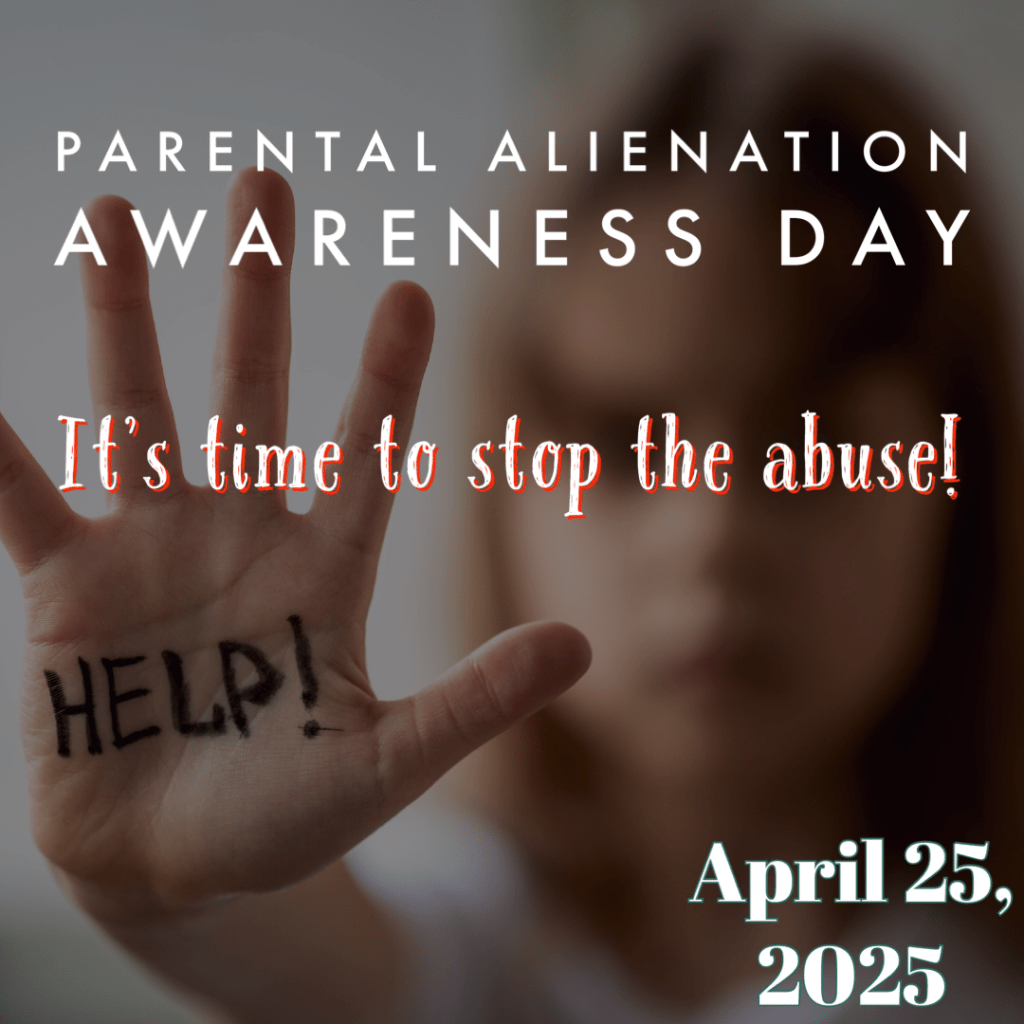
As Parental Alienation Awareness Day approaches again, I am struck by a mix of sadness and bewilderment similar to what I felt three years upon learning the term. The revelation that a name existed for the tumult and disarray that plagued my family for 15 years was jolting. It provided a rationale for the chaos, although the pain persisted. However, the sense of validation and understanding that came with realizing that someone had comprehended our situation was deeply comforting. Nevertheless, the harsh truth of what parental alienation entails and the fact that my son was a victim of this hit me suddenly. It was a stark realization that I couldn’t simply “fix” the issue or eliminate the abuse.
As I desperately sought assistance from various sources, finally having a term for our problem failed to help us. Many were unfamiliar with the term, and those who did comprehend the situation chose not to offer help, citing our son’s teenage status and informing me that authorities would not intervene at that point. While I had felt isolated in the past, the level of isolation I experienced when realizing that our family was fractured and not knowing how to mend it was overwhelming, with the heavy realization that no one else seemed to care.
Three years have passed, and the echoes of those words spoken by others–“he’ll be back” and “he just going through something”—now hold no significance, merely fading into the background as mere words. I doubt whether there was any real depth or purpose behind those phrases meant to divert attention from the topic. It was all I yearned to discuss, yet it seemingly remained an unpopular subject for everyone else.
Three years have passed, and unfortunately, there is no improvement in the relationship between my son and me. My concerns about the abuse our son may be facing are growing stronger. The thought of him being subjected to gaslighting, manipulation, emotional anguish, mental torment, and the looming possibility of physical harm weighs heavily on me. Having faced similar challenges during my time with his dad, I can empathize deeply with his struggles. I’ve witnessed his dad’s deteriorating mental health, fueled by avoidance and reluctance to confront his own inner demons, which has driven him to use our son to hurt me and assert control, seeking relief from his own suffering.
The message I intended to communicate to as many parents as possible regarding parental alienation has not gained the traction I had hoped to achieve. While some people have listened and understood the issue, I often feel a lack of acknowledgment from influential entities that could assist or drive transformation. My objective to boost awareness, promote clarity, and help children navigate the confusion caused by deception and manipulation has been inadequately recognized by those who could amplify its reach to benefit wider audiences.
I am deeply motivated by the crucial mission of advocating for this cause! Unfortunately, my family has faced challenging trials that deeply affected us. If I had known about parental alienation sooner, I would have approached our circumstances in a vastly different manner over the years.
While I thought I was dealing with an ex with a difficult personality, I didn’t know the degree of toxicity we faced. Instead of offering the support and guidance needed in a parental alienation situation, I often took the “high road,” incorrectly believing I was shielding us from further ridicule and drama overall. In hindsight, I should have provided comfort and guidance, confronting the issues head-on to reveal the truth instead of avoiding conflict. I regret not being transparent with our son about his dad’s deceitful words, thinking I was being better by staying silent.
Unknowingly, at the time, I inadvertently left our son alone to sort through a tumultuous swirl of emotions fed to him as a means of threatening our parent-child bond. Despite seeking help from different experts, including counselors for both our son and me, as well as a family physician, they lacked an understanding of parental alienation and, therefore, provided advice that did not address the complexities of parental alienation.
For us, when I learned about parental alienation, it was too late. The damage was done and I couldn’t protect our son from the alienation, let alone the years of abuse he’d already endured.
Our son was always compassionate, often stepping in to support those facing bullying. He wouldn’t have wanted to hear negative talk about me. Yet, I remember his repeating disrespectful comments about me from a young age, clearly influenced by his dad. Comments intended to undermine me, focusing on topics too mature for our son to understand. These inappropriate remarks served as judgments, teaching our son early on to mock his mother and view his dad as superior. Despite this, I would simply brush it off, thinking, “His dad really needs to find better priorities.” I hoped that he would eventually shift his focus to more important matters.
While strongly suspicious about what was happening, I hesitated to accept the harsh reality and questioned if it was all in my head. I feared acknowledging it would only worsen the situation. This fear was justified, as those with narcissistic traits typically react in defense when challenged. Nevertheless, with the information I possess now about parental alienation, I am confident I could have provided supportive statements to help our son recognize at least some of the manipulation he faced. I could have offered comforting words to ease the stress caused by the false information he received about me. Instead, I left him on an island to figure it out himself. Children aren’t mature enough to protect themselves in such a battle.
As I reflect on this issue and recall my conversations over the last three years, I believe that a genuine grasp of parental alienation can only be achieved by those who have directly experienced the trauma or those who are closely connected to the individuals affected. While some may observe the outcomes, they often fail to comprehend the intricate journeys and emotional burdens endured. Others disregard the broader spectrum of parental alienation, critique the research efforts, and impede the initiatives aimed at restoring parent-child relationships.
What happens if our families don’t receive help? What happens if the courts never understand the complexities of this abuse? What happens if the counselors, teachers, and doctors never understand? What happens if parental alienation isn’t considered abuse? What happens if it doesn’t become a punishable crime?
Then, our children suffered hardships that shaped the groundwork of their adult lives. Research indicates that they may struggle in their roles as parents, dealing with codependency issues that likely developed over time. This can result in tumultuous relationships, often with narcissistic partners. Heartache and lost opportunities aside, the generational cycle of difficulties begins and/or continues.
As I’ve shared our story with professionals who could help, some disregarded the gravity of the situation. While many acknowledge the prevalence of such abuse, they often fail to see the preventability of it. By increasing awareness and education, we have the opportunity to protect children from being used as pawns in harmful conflicts between parents.
I believe families would benefit significantly from a support system that understands the impact of parental alienation. All parents going through a separation or divorce should be educated on how to avoid this abuse for the long-term well-being of their children. Courts could play a pivotal role in protecting more children from the trauma, and children already exposed to parental alienation could receive support and guidance from teachers, counselors, clergy, coaches, and other significant adults.
For parents like myself, understanding their children’s challenges could make a lasting difference in their futures. With education, better comprehension of what their children truly struggle with could better equip them to navigate tough conversations more effectively. They might refrain from uttering words that inadvertently drive their children further away, unknowingly failing to recognize the abusive circumstances at play, which go beyond simply dealing with a challenging personality or a difficult child or teenager.
As the saying goes, “Education is the key to success,” I firmly believe this holds particularly true for this topic. Those who claim to know the subject but lack the willingness to contribute actively are hindering the progress toward eradicating this severe issue of abuse. Meanwhile, those who are indifferent or unwilling to delve deeper into understanding it are essentially leaving countless children to endure abuse without intervention. Those actively involved in addressing this issue, like myself, may often find themselves at a crossroads, seeking ways to amplify their impact and make a significant difference.
With Parental Alienation Awareness Day upon us, I commit to continue waking up with renewed determination to spread awareness about this form of abuse. I will continue searching for avenues to tell our story and educate those unfamiliar. Despite challenges and heartache along the way, knowing my efforts could potentially help others going through similar situations keeps me motivated. Through each effort, my goal is to inspire and give direction to parents burdened with alienation within their own families.
 HOW??
HOW?? 